

A cease and desist letter is a formal notice asking you to stop specific actions that may be seen as illegal or harmful. It’s not legally binding, but ignoring it can lead to lawsuits or increased penalties. Here’s a quick breakdown of how to respond effectively:
- Stay Calm and Read Carefully: Don’t act impulsively. Review the letter for details like who sent it, the allegations, and deadlines.
- Avoid Immediate Responses: Don’t reply or post anything publicly until you’ve gathered facts and consulted a lawyer.
- Consult Legal Counsel: A lawyer can assess the claims, spot weaknesses, and guide your next steps.
- Review the Allegations: Verify the legitimacy of the claims and gather supporting documents like emails or call logs.
- Draft a Professional Response: Acknowledge receipt, correct inaccuracies, and avoid admitting fault. Have your lawyer review it before sending.
Ignoring the letter can escalate the issue, especially in cases like telemarketing violations under the TCPA, where fines range from $500 to $1,500 per call or text. A calculated response can save you from costly legal battles.
What to do if you get a Cease & Desist letter // what to do if you are accused of infringement
sbb-itb-a8d93e1
Step 1: Read the Letter Carefully and Stay Calm
Getting a cease and desist letter can be nerve-wracking, but the key is to stay composed and avoid any rash decisions. These letters are meant to grab your attention and formally outline a dispute. Acting impulsively could complicate matters. As Traverse Legal emphasizes:
"Responding too fast or with emotion is a mistake you can’t walk back."
– Traverse Legal
Give yourself at least 48 hours before replying. This pause allows you to move past any initial emotional reactions and take a more calculated approach. A defensive or angry response could hurt your legal standing and turn a manageable issue into a costly legal battle. Also, resist the urge to vent about it on social media – anything you post could later be used against you in court.
Find the Key Information
After taking a moment to regroup, carefully review the letter for essential details. Identify who sent it – whether it’s a government agency like the FTC or SEC, a state Attorney General’s office, or a private law firm – and note the nature of the allegations. These could range from trademark infringement to contract violations or TCPA breaches. Pay attention to deadlines for compliance and any state laws mentioned.
Government-issued letters often indicate regulatory investigations, while private ones typically focus on intellectual property or contractual disputes. As Dr. Nick Oberheiden, Founding Attorney of Oberheiden P.C., advises:
"Upon receiving a cease and desist letter, it is important to engage defense counsel to examine the letter promptly."
– Dr. Nick Oberheiden
Understanding these details will help you prepare for the next steps with greater clarity.
Save All Related Documents
Once you’ve clarified the claims, it’s time to gather and preserve all relevant evidence. Receiving the letter officially puts you on notice of a legal issue, so it’s crucial to secure every piece of documentation tied to the allegations. This includes the letter itself, along with emails, call logs, texts, screenshots, internal communications, and any other materials mentioned. Avoid deleting or altering any records – tampering with evidence can have serious legal consequences and may be viewed unfavorably in court.
Instead, organize all documents in an accessible file for your legal team. For digital content, such as social media posts or website pages, take screenshots right away, as online material can change or disappear. Keeping thorough records not only protects you from accusations of evidence tampering but also helps your legal team build a well-informed response.
Step 2: Don’t Respond Right Away or Post Publicly
When you first receive the letter and gather your documents, the urge to reply immediately or vent online can be strong. But here’s the thing: every email, text, or social media post can be included in the legal record and potentially used against you in court. Traverse Legal emphasizes this point:
"A rushed email, an angry reply, or a careless admission can shift leverage to the other side before a complaint is ever filed."
– Traverse Legal
Reacting in haste – whether through an emotional message or an unintended admission – can turn a situation that might have been resolved peacefully into a full-blown legal battle. Even a seemingly innocent statement could weaken your defense later. Aggressive language can provoke further legal action, and public posts can harm your reputation, attract unwanted attention, and give the opposing party extra ammunition. Courts might even interpret public complaints as bad faith or as evidence that you’re continuing the alleged violation after being warned.
Taking a moment to pause is not just about avoiding mistakes; it’s about setting yourself up for a proper legal response. If you must respond urgently, keep it short and neutral – acknowledge receipt of the letter and state that you’re consulting legal counsel. Otherwise, use the first 48 hours to stay calm, gather all relevant facts, and seek advice from an attorney before making your next move.
Once you’ve managed your initial reaction, the next step is to focus on securing legal guidance.
Step 3: Get Legal Help
Once you’ve gathered all your documents, it’s time to seek expert legal advice. This step is crucial for crafting a well-informed response and avoiding rash decisions. Acting without legal counsel can be risky. As Enrico Schaefer from Traverse Legal puts it:
"Responding to a cease and desist letter without legal counsel is like walking into a negotiation blindfolded."
– Traverse Legal
A legal expert can quickly assess the situation, determining whether the claims against you are valid or exaggerated. They can spot misrepresentations of the law, intimidation tactics, or unenforceable demands. They can even verify if the letter is authentic, as some cease and desist letters are fraudulent attempts to scare recipients into compliance. A basic legal review typically costs less than $1,000, a small price to pay compared to the potential fallout of a misstep, which could lead to lawsuits or additional damages.
How ReportTelemarketer.com Can Assist
If your situation involves telemarketing violations – such as unwanted calls or texts – ReportTelemarketer.com offers specialized, no-cost assistance. This platform allows consumers to report telemarketing violations, investigates claims using advanced tools, and works to stop the unwanted calls. Their services include filing cease and desist letters or formal complaints against violators. The best part? There are no upfront costs for users. Attorney fees are recovered directly from the telemarketers when applicable, ensuring you get professional legal help without worrying about out-of-pocket expenses.
The Importance of Legal Expertise
Having legal representation shields you from making accidental admissions or missteps. Dr. Nick Oberheiden, Founding Attorney at Oberheiden P.C., highlights this:
"Upon receiving a cease and desist letter, it is important to engage defense counsel to examine the letter promptly. Based on the sender and the sender’s specific demands, your defense counsel can determine appropriate next steps and take appropriate responsive action on your (or your company’s) behalf."
– Dr. Nick Oberheiden
Legal professionals bring structure and clarity to what can often feel like an emotionally charged situation. They help you craft a professional response and evaluate your options – whether that’s compliance, negotiation, or pushing back – based on the sender’s legal standing. Skipping this step could backfire, as courts may later interpret your actions as bad faith, potentially leading to higher damages in intellectual property disputes.
With a legal expert guiding you, you’re better equipped to carefully review the claims and decide how to proceed.
Step 4: Review the Claims and Decide What to Do
With legal advice in hand, it’s time to dive into the specifics of the claims and outline your strategy. This step involves carefully analyzing the allegations in the letter and understanding the implications of each possible response.
Check the Facts
Start by verifying the legitimacy of the claims. Determine whether the letter comes from a government agency like the FTC or SEC, or from a private party, and identify the type of legal claim being made – whether it’s related to trademark infringement, copyright issues, defamation, or violations like the TCPA.
For intellectual property claims, confirm that the sender has a valid registration. Some claims may rely on weak legal grounds or lack proper registrations. In trademark disputes, check who used the mark first, as this could establish your priority over the sender. For telemarketing-related allegations, verify if you had "prior express written consent" from the consumer, which is a key defense under the TCPA. Additionally, check if the recipient’s number was listed on the National Do-Not-Call Registry and for how long.
Be sure to preserve all relevant evidence. This includes emails, files, screenshots, call logs, and internal communications that could support or refute the claims. If the issue involves harassment or telemarketing, document every call, including the time, date, and identity of the caller.
Know What Could Happen
Every response option comes with its own risks and potential benefits. Ignoring the letter can lead to lawsuits, injunctions, or even enhanced damages, as courts may interpret silence as willful infringement. On the other hand, complying with the claims could demonstrate good faith and potentially prevent further liability. As Dr. Nick Oberheiden points out, it’s often possible to "leverage a settlement that insulates you and your company against the risk of facing claims in litigation related to the underlying allegations". However, complying unnecessarily could mean giving up legitimate rights or revenue.
If you choose to dispute the claims, solid evidence can help you dismiss weak allegations. But be cautious – a poorly supported challenge could escalate the situation and lead to immediate legal action. Negotiating a settlement is another option. It allows for a private resolution and can include compromises, such as phasing out a product name, which is often more cost-effective than litigation. For TCPA violations, statutory damages range from $500 to $1,500 per violation if deemed willful, making early resolution an attractive choice.
Your response should be calculated and deliberate to avoid unnecessary legal battles. With a thorough understanding of the facts and the possible outcomes, you’ll be ready to craft a professional and effective reply.
Step 5: Write a Professional Response
Once you’ve reviewed the claims with your lawyer, it’s time to draft a formal, concise reply. This response can significantly influence future legal discussions, so every word matters. With your facts in order and a clear strategy in place, craft a reply that firmly represents your legal position.
What to Include in Your Response
Begin by acknowledging receipt of the letter. Clearly state that you are reviewing the allegations and have sought legal counsel. Address each claim individually, correcting any factual inaccuracies, legal errors, or exaggerated statements made by the sender.
Back up your response with the evidence you’ve gathered – this might include contracts, emails, or registration records. For example, in telemarketing disputes, you could provide proof of prior express written consent or documentation showing the caller’s number wasn’t listed on the National Do-Not-Call Registry. Be cautious not to admit to any wrongdoing or liability, as even an unintentional admission could be used against you later. If the claims are vague or unclear, end your reply by requesting additional information or clarification.
Keep the tone of your response professional and objective. Avoid emotional or confrontational language, as this can escalate the situation and create a negative impression if the matter proceeds to court. Your goal is to maintain control of the narrative and protect your legal standing – don’t enter negotiations without a calculated plan.
Have a Lawyer Review Your Reply
Before sending your response, have it reviewed by your attorney. They can identify weaknesses in the sender’s claims, such as missing registrations or overreaching demands, and ensure your language doesn’t inadvertently concede anything. While a basic legal review might cost less than $1,000, Traverse Legal emphasizes the importance of this step:
"One bad reply can trigger litigation that far exceeds the cost of doing it right"
– Traverse Legal
Having your lawyer send the response on your behalf can also shift the tone from a personal dispute to a structured legal negotiation. This approach can help dismantle weak claims, protect you from costly errors, and ensure your reply adheres to consumer protection laws and procedural standards.
Response Options for Telemarketing Cases
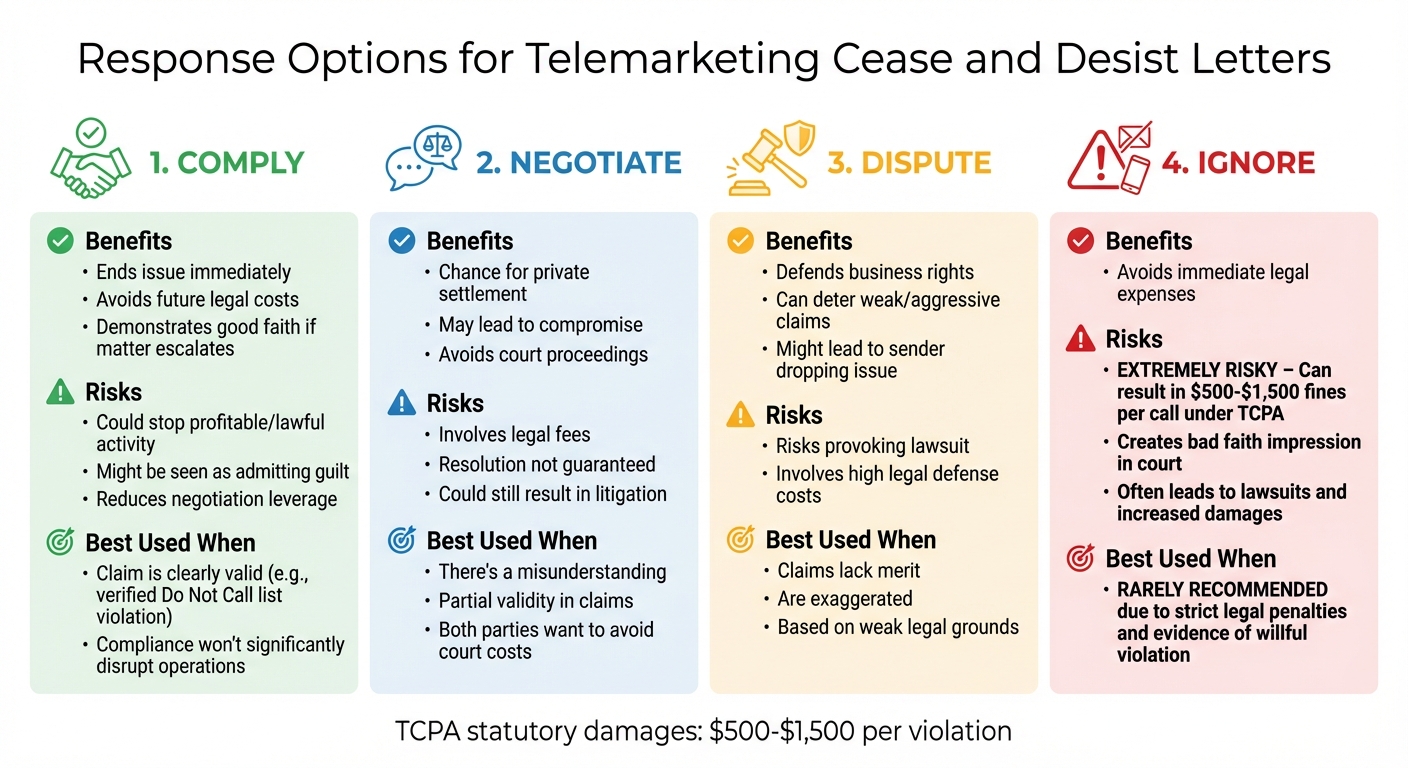
Telemarketing Cease and Desist Response Options: Benefits, Risks, and Best Use Cases
Comparison of Response Approaches
Choosing the right way to respond to telemarketing cease and desist letters is critical. It helps protect your rights while minimizing potential legal risks. Here’s a breakdown of four common response strategies and when they might work best:
| Response Approach | Benefits | Risks | When it Works Best |
|---|---|---|---|
| Comply | Ends the issue immediately, avoids future legal costs, and demonstrates good faith if the matter escalates to court. | Could stop a profitable or lawful activity; might be seen as admitting guilt; reduces leverage in negotiations. | When the claim is clearly valid (e.g., a verified Do Not Call list violation) and compliance won’t significantly disrupt operations. |
| Negotiate | Offers a chance for private settlement; may lead to a compromise; avoids court proceedings. | Involves legal fees; resolution isn’t guaranteed; could still result in litigation. | When there’s a misunderstanding, partial validity in the claims, or both parties want to avoid court costs. |
| Dispute | Defends your business rights; can deter weak or aggressive claims; might lead to the sender dropping the issue. | Risks provoking a lawsuit; involves high legal defense costs. | When the claims lack merit, are exaggerated, or based on weak legal grounds. |
| Ignore | Avoids immediate legal expenses. | Extremely risky: Can result in $500–$1,500 fines per call under TCPA; creates a bad faith impression in court; often leads to lawsuits and increased damages. | Rarely recommended in telemarketing cases due to strict legal penalties and evidence of willful violation. |
Your response should balance the strength of the sender’s claims with the potential impact on your business. Ignoring these letters is especially dangerous. As Enrico Schaefer, Founding Partner at Traverse Legal, explains:
"Courts may interpret your silence as evidence that you knew about the issue and chose to proceed anyway. That can trigger enhanced damages… or weaken your defense" – Enrico Schaefer
The Telephone Consumer Protection Act (TCPA) imposes steep fines, making a thoughtful response essential. Ignoring a cease and desist letter rarely ends well, given the potential for significant statutory penalties.
For those dealing with telemarketing-related cease and desist letters, ReportTelemarketer.com offers valuable assistance. Their legal team specializes in consumer protection laws, including TCPA regulations, and can help determine whether claims are valid or excessive. While they primarily assist consumers in stopping unwanted calls, their deep understanding of telemarketing laws can provide crucial insights for businesses as well.
Ultimately, your decision should consider both the legal strength of the sender’s claims and how compliance might affect your operations. A basic legal review – typically costing less than $1,000 – can save you from much more expensive litigation down the road.
Conclusion
Receiving a cease and desist letter can feel overwhelming, but staying calm and taking deliberate steps is key. Every decision you make – from how you handle the letter to how you respond – can significantly affect your legal position.
Consulting with a legal professional is often the best course of action. They can assess whether the claims are legitimate, exaggerated, or entirely baseless. They may also spot vulnerabilities in the sender’s argument that you might miss. As Enrico Schaefer, Founding Partner of Traverse Legal, wisely points out:
"A rushed email, an angry reply, or a careless admission can shift leverage to the other side before a complaint is ever filed." – Enrico Schaefer, Founding Partner, Traverse Legal
For issues related to telemarketing, ReportTelemarketer.com provides free assistance to protect your rights. Their team focuses on consumer protection laws like the TCPA, offering guidance at no cost to you. They handle everything from investigating potential violations to filing formal complaints, simplifying what can otherwise feel like a daunting process.
Ignoring a cease and desist letter is rarely a good idea. As mentioned earlier, silence might be interpreted as bad faith, which could lead to harsher penalties or weaken your defense. Whether you decide to comply, negotiate, or contest the claims, your response should always be professional, well-documented, and legally grounded – following the steps outlined in this guide.
FAQs
Can a cease and desist letter be a scam?
Yes, some cease and desist letters are scams. Scammers often use these letters to intimidate or mislead people by making false accusations or threats. If you ever receive one, take a moment to verify its legitimacy. It’s a good idea to consult a legal professional to ensure you’re dealing with a genuine claim and not falling victim to deception.
What should I do if the letter has a tight deadline?
If you’ve received a cease and desist letter with a tight deadline, it’s crucial to act quickly but thoughtfully. Here’s how to handle it:
- Acknowledge the deadline: This shows you’re aware of the urgency and taking the matter seriously.
- Seek legal advice: Consult an attorney to help you draft a response that safeguards your rights and addresses the claims effectively.
- Send a neutral acknowledgment if needed: If you can’t get immediate legal guidance, reply briefly to confirm receipt of the letter and state that you’re reviewing the situation.
Make sure to respond before the deadline to avoid unnecessary complications or escalation.
What evidence should I preserve right away?
When dealing with an issue, it’s crucial to save any evidence that backs up your claims or actions. This could include communications, screenshots, or posts that document what you said or did. Make sure to capture authenticated copies of social media posts or website pages before sending a cease and desist letter – this helps protect against potential tampering. Also, keep a record of any online content or digital materials that could support your position or defense.

