
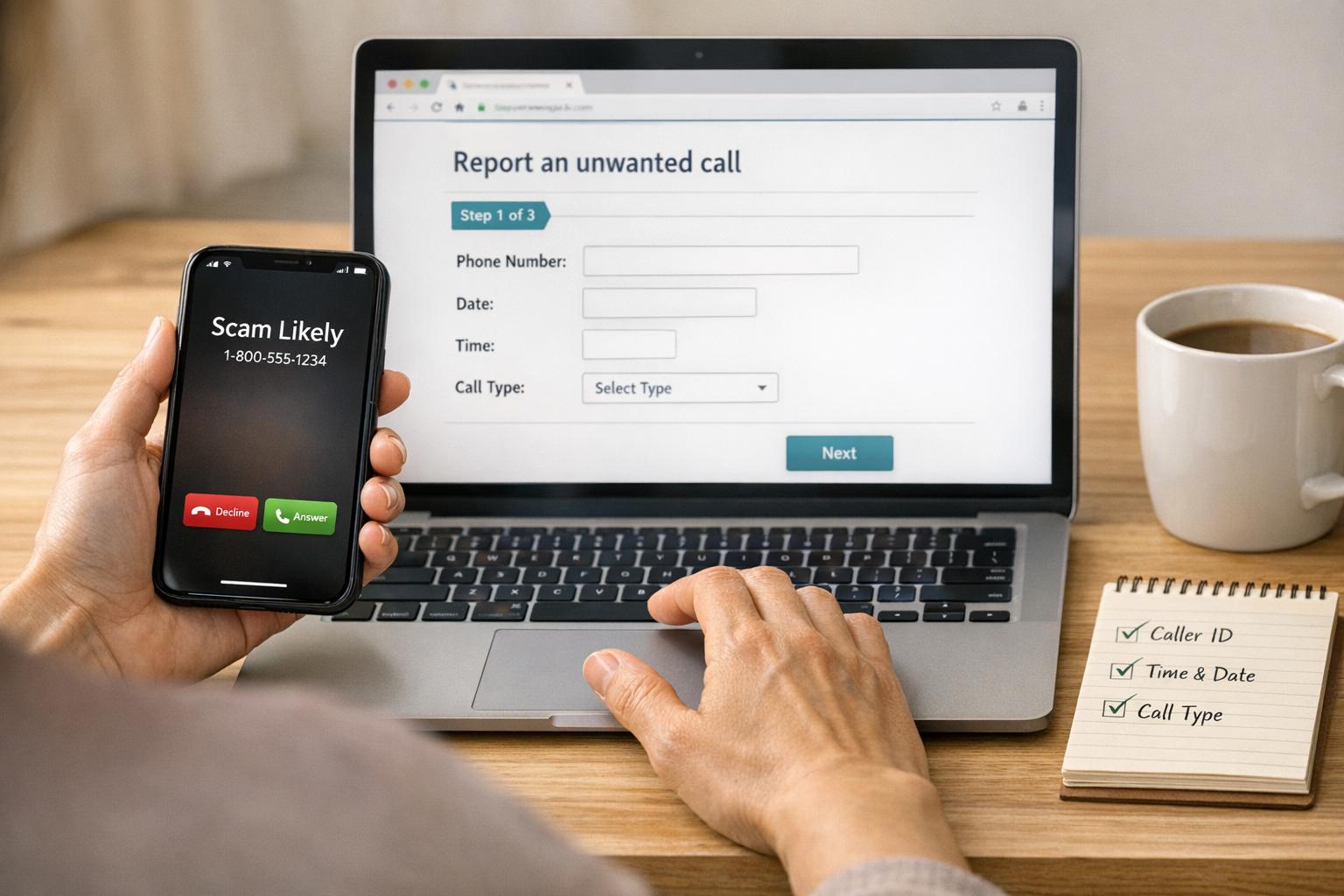
Robocalls are more than annoying – they can threaten your privacy and finances. Scammers often use these calls to steal sensitive information like Social Security numbers. Reporting them helps protect you and supports investigations by agencies like the FTC and FCC. Here’s what you need to know:
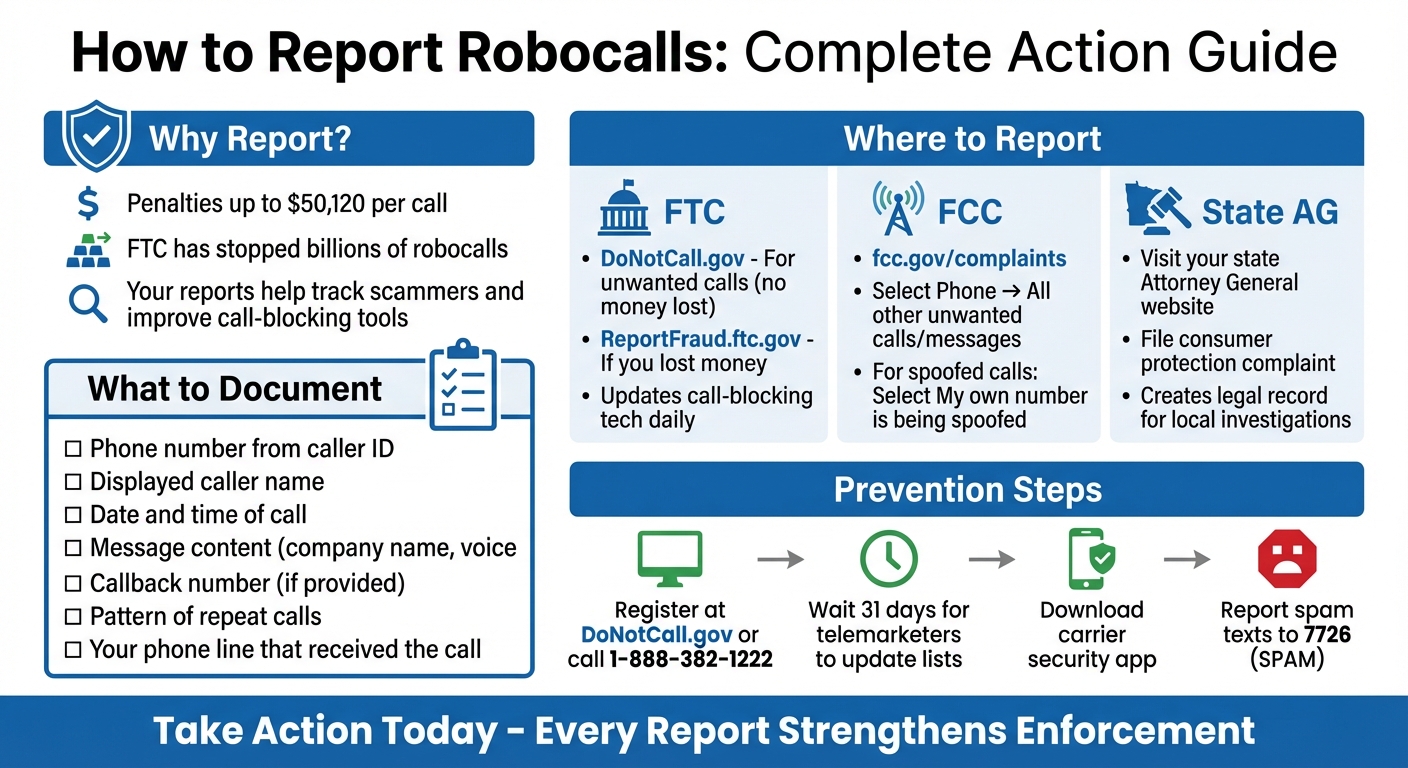
- Why Report? Your reports contribute to tracking scammers, enforcing penalties (up to $50,120 per call), and improving call-blocking tools.
- What to Document: Log the caller ID, date, time, and message details. Track repeat calls to show patterns.
- Where to Report:
- FTC: Use DoNotCall.gov for unwanted calls or ReportFraud.ftc.gov if you lost money.
- FCC: Submit complaints at fcc.gov/complaints.
- State Attorney General: File reports via your state’s consumer protection office.
- Prevent Future Calls: Register at the National Do Not Call Registry and use your phone carrier’s call-blocking tools.
Take action today. Reporting robocalls strengthens enforcement efforts and helps build safer communication networks.
How to Report Robocalls: A Step-by-Step Guide
What To Do If You Get a Robocall | Federal Trade Commission
Gather Information Before Reporting
Accurate details are key to helping agencies track and stop scammers. As the FCC explains:
"The Enforcement Bureau relies on information and complaints from consumers to help us identify illegal robocall and robotext campaigns that bombard Americans with unwanted messages every year."
The more detailed your documentation, the easier it is for agencies to spot patterns and take action. For example, in March 2021, the FCC issued a record-breaking $225 million penalty for nearly 1 billion spoofed robocalls that violated the Truth in Caller ID Act. To ensure your complaint supports effective enforcement, gather the following information before filing.
Record the Phone Number and Caller ID
Start by noting the phone number that appears on your caller ID, along with the displayed name and the phone line that received the call. If the call includes an automated message with a callback number, make sure to record that as well. Be alert for "neighbor spoofing", where scammers use a number similar to yours to increase the chance you’ll pick up. The FTC emphasizes:
"Knowing all of this information helps the FTC track down the scammers behind the call. Even if you think the number on your caller ID is fake, report it."
Write Down the Date, Time, and Message
Keep a log of the date and time of each call, as well as the message content. This is especially important because telemarketers are not allowed to call before 8 a.m. or after 9 p.m. in your local time zone. Note the company name mentioned in the message and whether the voice was prerecorded, artificial, or AI-generated. If you spoke with a live representative and asked to be added to their internal do-not-call list, document the date and time of that conversation.
Track Calls from the Same Source
If you receive multiple calls from the same number, document each instance to show a pattern of violations. Identifying these patterns can significantly strengthen your report. For example, in October 2020, the FCC issued a $37.5 million penalty against Affordable Enterprises of Arizona, LLC for millions of spoofed robocalls promoting home improvement services. In that case, consumer reports helped reveal a pattern of calls that appeared to come from local numbers.
Report to Government Agencies
Once you’ve documented those pesky robocalls, the next step is reporting them to both federal and state agencies. These reports are critical – they help authorities spot trends, track down scammers, and take action. In fact, the FTC has successfully stopped individuals and companies responsible for billions of robocalls through these enforcement efforts.
Here’s how you can report your experience to the right agency.
File a Complaint with the FTC
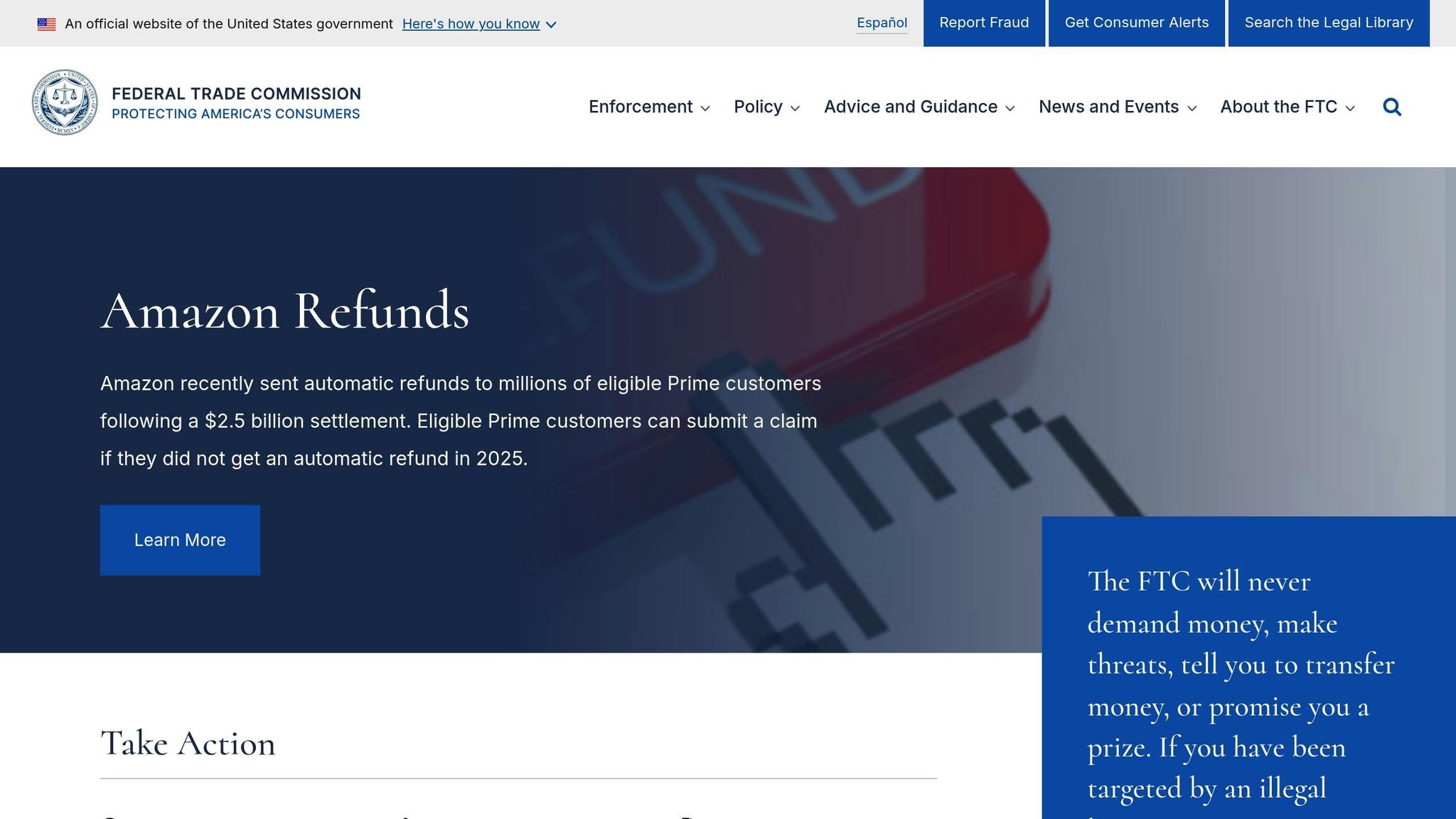
The Federal Trade Commission (FTC) offers two specific portals for reporting robocalls, depending on your situation.
- If you’re dealing with unwanted sales calls or robocalls but didn’t lose money, head over to DoNotCall.gov.
- If you lost money to a scam, file your complaint at ReportFraud.ftc.gov.
When submitting your report, make sure to include details like the caller’s number, any spoofed caller ID information, callback numbers, and the exact date and time of the call. The FTC uses this information to track calling patterns and publishes reported numbers daily to assist telecom carriers in refining their call-blocking technologies. Also, violators of the National Do Not Call Registry could face fines of up to $50,120 per call.
Report to the FCC
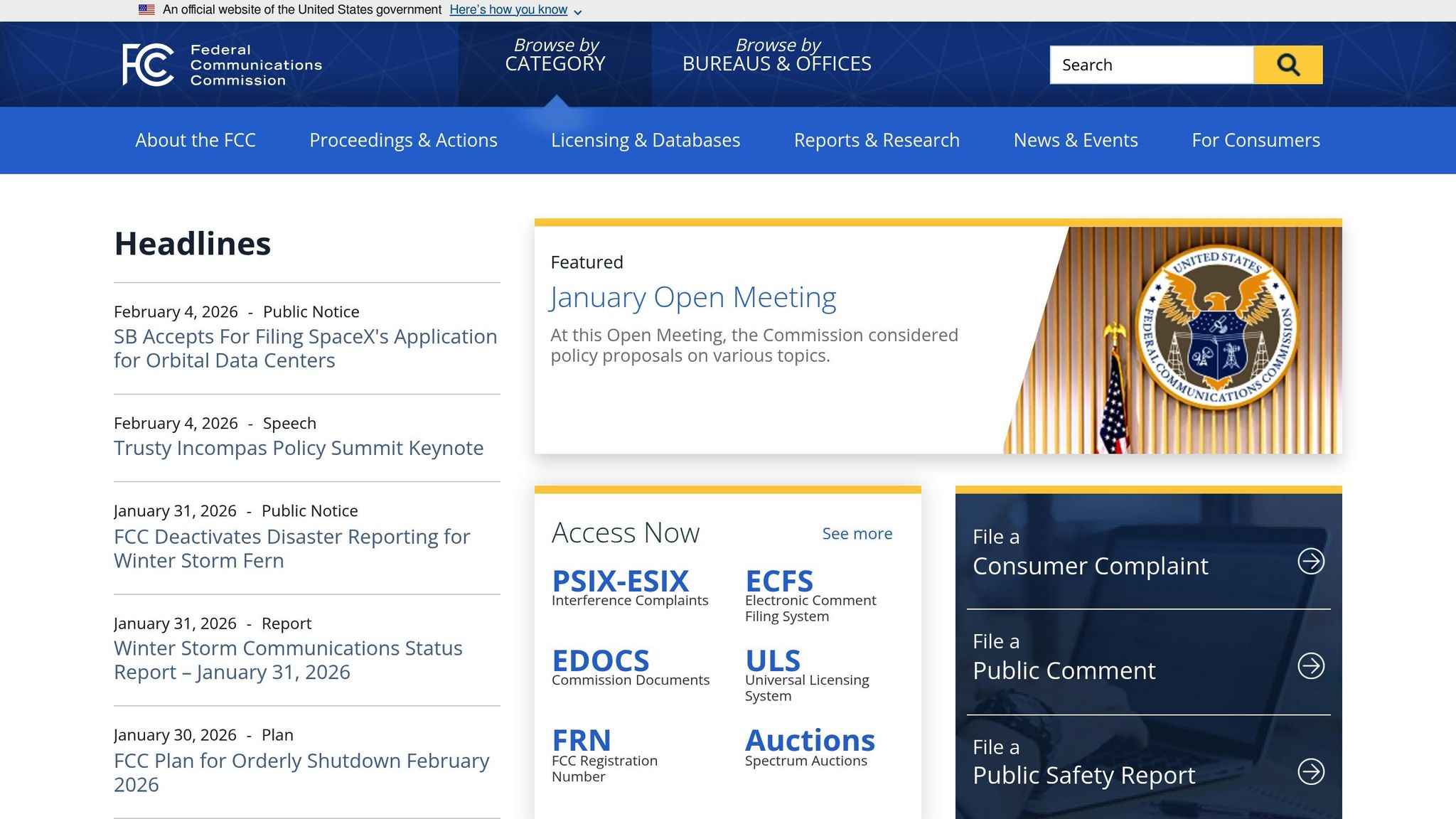
If the robocall involved caller ID spoofing or illegal marketing, the Federal Communications Commission (FCC) is your go-to agency. File your complaint through their Consumer Complaint Center at fcc.gov/complaints.
Here’s how to navigate the process:
- Select "Phone" as the complaint type.
- For standard robocalls, choose "all other unwanted calls/messages."
- If the call spoofed your number, select "my own number is being spoofed".
While the FCC doesn’t resolve individual complaints, your report contributes to broader policy decisions and enforcement actions. These collective efforts have proven effective in cracking down on robocall-related violations.
Contact Your State Attorney General
State-level reporting is another powerful tool. Most state attorney general (AG) offices have online forms specifically for reporting robocalls or "No Call" violations. States like Ohio, North Carolina, and Indiana even offer streamlined portals to make the process easier.
If you’ve lost money to a phone scam, filing a report with your state AG not only creates a legal record but could also lead to local investigations. As the California Attorney General’s Office explains:
"While we cannot resolve individual complaints, we use reports to investigate patterns and practices of fraud and other misconduct."
State attorneys general can pursue enforcement actions under their own consumer protection laws, adding another layer to federal efforts. So, don’t overlook this option – it’s a crucial step in holding scammers accountable.
sbb-itb-a8d93e1
Use Consumer Protection Services
While government agencies tackle enforcement on a broad scale, specialized consumer protection services step in to provide focused legal action. These services work hand-in-hand with government efforts to address specific cases.
How ReportTelemarketer.com Works
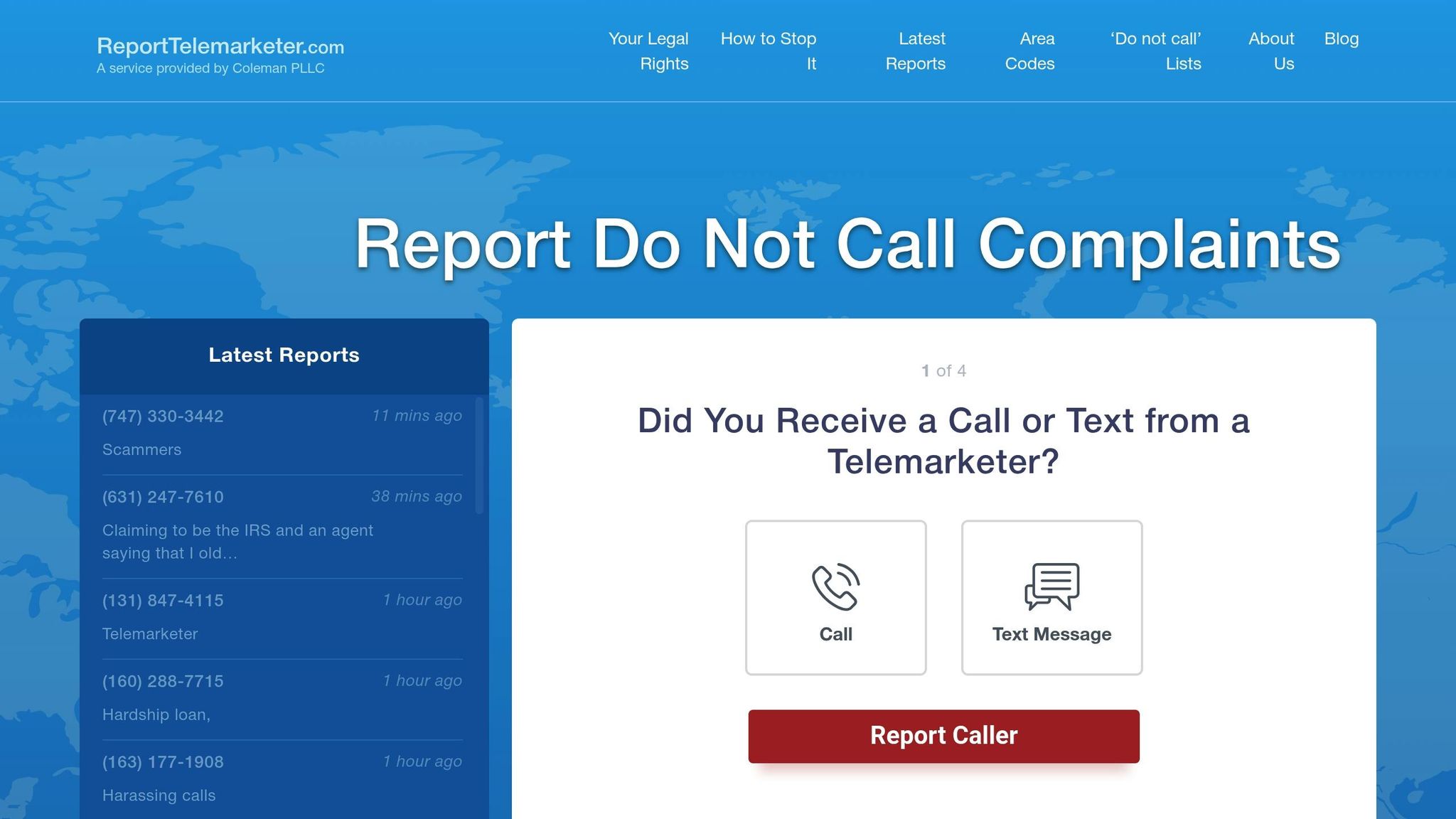
ReportTelemarketer.com is one such service, helping over 30,000 people put an end to unwanted calls. The platform is designed to tackle the tricky issue of identifying callers who use spoofed or hidden numbers.
Here’s how it works: once you submit a report, the platform’s expert team uses proprietary tools to trace the telemarketer. This process addresses the difficulty of tracking anonymous or disguised callers. If the investigation confirms that the telemarketer contacted you without your consent, the firm steps in with legal action – whether that’s sending cease-and-desist letters or filing formal complaints.
The best part? It’s completely free for consumers. Coleman, a representative of the firm, explains:
"As a consumer protection firm, we use the telephone consumer protection laws to stop telemarketers from harassing consumers".
The firm collects attorney fees directly from the telemarketer once the calls are stopped. Plus, you might even be eligible to receive up to $500 per call.
Getting started is simple. Visit the website and complete the reporting form with as many details as possible about the unwanted calls – things like the phone number, call frequency, and the content of the messages. For example, if the call mentioned a "hardship loan" or a "Medicare" scam, include that information to improve the accuracy of the investigation. While legal action is being pursued, you might also want to explore other ways to block future calls.
Reduce Future Robocalls
After you’ve reported unwanted calls, there are steps you can take to cut down on future interruptions. Two key strategies include registering your number with the National Do Not Call Registry and using your phone carrier’s call-blocking tools.
Add Your Number to the National Do Not Call Registry
The National Do Not Call Registry is a free service provided by the government to help stop sales calls from legitimate businesses that follow the law. To register, visit DoNotCall.gov or call 1-888-382-1222. Once you’ve signed up, you’ll need to confirm your registration via email within 72 hours. Your number will stay on the list indefinitely unless you remove it or it’s reassigned.
Here’s how it works: Telemarketers are required to check the registry every 31 days and remove registered numbers from their call lists. This means it could take up to a month for sales calls to stop. However, keep in mind that certain types of calls are still allowed, such as political campaigns, charitable solicitations, debt collection, surveys, and calls from companies you’ve recently interacted with or given permission to contact you. Unfortunately, scammers don’t always follow the rules, so they might ignore the registry altogether.
If you continue to get sales calls after 31 days, you can report them at DoNotCall.gov. Be sure to include details like the caller’s number and the date and time of the call.
For even more protection, take advantage of the tools provided by your phone carrier.
Block Calls Through Your Phone Carrier
Most phone carriers now offer tools to help block unwanted calls, working in tandem with the Do Not Call Registry. Many major carriers automatically enroll customers in basic call-blocking services, which flag suspicious numbers with labels like “spam” or “scam likely.” These basic features are often free, but some carriers offer premium services for a small monthly fee.
To take full advantage, download your carrier’s security app. These apps not only block suspicious calls but also let you report spam. When you report a number, your carrier adds it to a shared database, making call-blocking tools more effective for everyone. For spam texts, you can forward the message to 7726 (SPAM) to report it.
If you use a VoIP home phone, check with your provider for internet-based blocking options. For traditional landlines, a physical call-blocking device – installed between your phone and the wall jack – can help filter out unwanted calls.
Conclusion
Tackling robocalls effectively requires a multi-layered approach that not only addresses the current problem but also prevents future scams. Start by keeping detailed records – note the caller ID, date, time, and any message details. Reporting every call, even spoofed ones, is crucial to helping authorities track down illegal operations.
File reports with the FTC, FCC, and your state’s Attorney General. These agencies work on tracing scams and imposing penalties. For more immediate action, platforms like ReportTelemarketer.com can help by investigating cases, sending cease-and-desist letters, and filing formal complaints – all at no cost.
Prevention plays an equally important role. Register your number on the National Do Not Call Registry and take advantage of call-blocking tools offered by your phone carrier. If you receive an unauthorized sales call, simply hang up and report it. Engaging with these calls only encourages more robocalls.
FAQs
How can I tell if a robocall is using neighbor spoofing?
Neighbor spoofing is a trick robocallers use to manipulate caller ID, making it show a number that looks similar to yours or has a local area code. The goal? To make the call seem familiar so you’re more likely to pick up.
To identify neighbor spoofing, watch for calls from numbers that look almost identical to yours but don’t seem familiar. If you’re unsure about the caller, let it go to voicemail. Real callers will typically leave a message, while robocallers usually won’t bother.
What information should I provide when reporting a robocall to the FTC or FCC?
When submitting a robocall complaint to the FTC or FCC, it’s essential to include detailed information to assist in the investigation. Be sure to provide:
- The caller’s phone number: This helps trace the source of the call.
- Date and time: Specify when the call occurred to narrow down the investigation.
- Description of the call: Mention if it was a sales pitch, a scam attempt, or another type of unsolicited message.
- Recordings or transcripts: If you have a recording or written transcript, include it for further analysis.
The more precise and complete your information, the better the chances of identifying and addressing violations.
How does the National Do Not Call Registry help reduce robocalls?
The National Do Not Call Registry is a tool designed to cut down on robocalls by letting you register your phone number on a list that telemarketers are legally obligated to avoid. This helps reduce unwanted sales calls from companies that follow the rules.
However, it’s important to note that the registry doesn’t stop all robocalls – particularly those from scammers who operate outside the law. For those persistent or illegal calls, you can report them to consumer protection agencies to take further action.

